
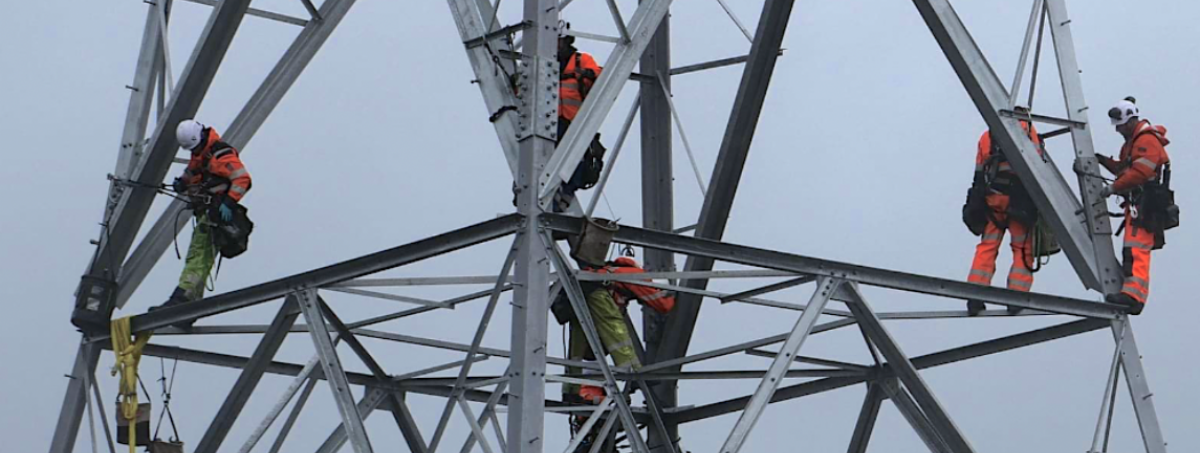
Balfour Beatty, M Group and United Infrastructure have joined BEAMA as founding members of its new Electricity Network Infrastructure Services Group, a launch that matters to association and institute professionals as a manufacturers’ trade body widens its membership to the contractors who build what its members make. United Infrastructure helped establish the group and will chair it.
BEAMA, formerly the British Electrotechnical and Allied Manufacturers’ Association, represents manufacturers and suppliers of electrical equipment and energy infrastructure technology.
United Infrastructure is a Warrington headquartered contractor that designs, builds and maintains power transmission and distribution infrastructure. Balfour Beatty and M Group are UK infrastructure contractors working on energy and utility networks.
The launch follows the Electricity Networks Sector Growth Plan, which sets out 181 billion pounds of network investment by 2035. BEAMA and the Energy Networks Association, the industry body for network operators, formed a growth partnership to deliver it.
Yselkla Farmer, chief executive of BEAMA, said, “This is the largest electricity network upgrade in a generation, and the scale is unprecedented.”
Griff Thomas, executive director of energy transition at United Infrastructure, said, “A contractor’s perspective is critical if the UK is to deliver this infrastructure as efficiently as possible.”
The group extends a manufacturers’ association into delivery because the investment plan depends on construction capacity.
Electricity demand connection requests in the queue rose from 41 gigawatts to 125 gigawatts between November 2024 and June 2025, according to Engineering and Technology Magazine. The new group aims to influence procurement rules and industry standards and to improve visibility of future work, according to Infrastructure Now.
For the sector, a trade body that holds manufacturers and contractors together can align equipment supply, design and construction in one forum rather than negotiating between separate associations. For the sector’s contractors specifically, a direct route into the growth partnership gives delivery firms a voice in procurement, regulation and skills planning.
Whether the group turns contractor experience into changes to procurement and training, rather than a wider membership list, will indicate how far trade bodies can organise a supply chain across the sector.
Source: Construction Enquirer / Engineering and Technology Magazine / Infrastructure Now








.png)